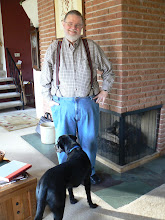
On my way between Louisville and Chicago this spring, I stopped in Indianapolis to visit with Felipe Martinez. Felipe was a candidate under care of Blackhawk Presbytery years ago when I chaired that committee. He was an exceptional candidate, and became an outstanding pastor. He now is the Associate Executive Presbyter of Whitewater Valley Presbytery. Felipe is a native of Monterrey, Mexico, and I wanted to get his perspective on how churches might do things in new and different ways. Here are some of the things that Felipe shared with me during the course of our conversation.
Whitewater Valley Presbytery is in a partnership with a group headed by Stan Ott, called Acts 16:5 (www.vitalchurchesinstitute.com). It is a program to help congregations consider how they are the church. What are they here to be and do? The Presbytery has entered into a contract with the group, and then invited congregations to participate. The cost is $1,300 per year, and about 14 churches are participating.
The Presbytery also is in an international partnership with a presbytery in Cancún. That Presbytery has a strong expectation of the leadership of their elders, which is something that the churches in WWV Presbytery are learning about.
Felipe mentioned that it might be worth looking at the Riverside Presbyterian Church in Sterling, Virginia (www.riversidechurch.com). They are a congregation that has intentionally chosen not to own a building. I will definitely follow up by contacting this congregation during this extended part of my sabbatical study.
Wednesday, July 28, 2010


Tuesday, July 27, 2010
Joanne Lindstrom
Joanne is the Director of Experiential Education and Field Studies at McCormick... what I've known as a Field Ed. Director. Here are some of my notes from my conversation with her.
Scripture says that "The Word became flesh and dwelt among us." Word shapes and forms our culture. We have to keep our faith language and culture alive, and not be shaped by the business model of our culture.
She's very familiar with the Church in Ghana. She told me that the churches there are in the business of planting other churches. That's their mode of, and passion for, evangelism. For example, a church of 1,000 members might have 7-10 "daughter churches" of 100-200 members each, and the 200 member churches each might have one or two "daughter churches." In other words, instead of expecting people to come build up one congregation, they go to where the people are and begin a community of faith there! That reminded me of how Central Pres. ended up located where we are now. The congregation was downtown, but began a Sunday School mission in a small chapel at our current location. As that mission grew and grew, the congregation decided to move to the site. We went to where the people were. What can we learn from that attitude as we move into new ways of being the Church?
Joanne then asked a fascinating question: "Are we interested in 'growing' or 'swelling'?" In other words, do congregations just want to get bigger (i.e., have more members), or do we want to figure out what it means to grow in faithfulness and discipleship?
Scripture says that "The Word became flesh and dwelt among us." Word shapes and forms our culture. We have to keep our faith language and culture alive, and not be shaped by the business model of our culture.
She's very familiar with the Church in Ghana. She told me that the churches there are in the business of planting other churches. That's their mode of, and passion for, evangelism. For example, a church of 1,000 members might have 7-10 "daughter churches" of 100-200 members each, and the 200 member churches each might have one or two "daughter churches." In other words, instead of expecting people to come build up one congregation, they go to where the people are and begin a community of faith there! That reminded me of how Central Pres. ended up located where we are now. The congregation was downtown, but began a Sunday School mission in a small chapel at our current location. As that mission grew and grew, the congregation decided to move to the site. We went to where the people were. What can we learn from that attitude as we move into new ways of being the Church?
Joanne then asked a fascinating question: "Are we interested in 'growing' or 'swelling'?" In other words, do congregations just want to get bigger (i.e., have more members), or do we want to figure out what it means to grow in faithfulness and discipleship?
Cynthia Campbell - McCormick Seminary President
In the midst of her busy schedule, Cynthia Campbell was gracious enough to sit down and visit with me about my sabbatical work.
She began with what to me is an intriguing, compelling question: If there weren't a Presbyterian church in your neighborhood or community, why would there need to be one? This is a question worth pondering... and worth finding an answer for!
Cynthia was also very helpful to me when she asked what it was that sparked my sojourn in this area. I replied that, although I've been thinking and studying and praying and reflecting for years on different ways of being the church, the specific thing that sparked this sabbatical was our financial situation at Central. And, I said, chief among the drains on our finances is our building... with utilities alone costing us between $25,000 and $30,000 each year! Then there is the usual upkeep and repairs, but there are the long-term, major needs that we need to address in our building: the heating system (not just the boiler), deterioration of some of the stained glass windows, the continual moisture problems that we have, etc.
Cynthia replied by saying that if the church building is problematic, then we need to deal with the building! That helped bring things into focus for me. Merging with another congregation in our building, or bringing in other non-profit corporations in our building is not going to solve the building problems that we have. We either need to fix the building permanently, or else abandon the building and come up with something new. I know this sounds radical, but it makes sense to me. I already have passed this along to our Long-Range Planning Committee and to our Session. I also just shared this in my newsletter page at church that will be mailed out this week. We'll see how this "plays" in the congregation in general - although this seemed to make sense both to the LRP Committee and to the Session.
She began with what to me is an intriguing, compelling question: If there weren't a Presbyterian church in your neighborhood or community, why would there need to be one? This is a question worth pondering... and worth finding an answer for!
Cynthia was also very helpful to me when she asked what it was that sparked my sojourn in this area. I replied that, although I've been thinking and studying and praying and reflecting for years on different ways of being the church, the specific thing that sparked this sabbatical was our financial situation at Central. And, I said, chief among the drains on our finances is our building... with utilities alone costing us between $25,000 and $30,000 each year! Then there is the usual upkeep and repairs, but there are the long-term, major needs that we need to address in our building: the heating system (not just the boiler), deterioration of some of the stained glass windows, the continual moisture problems that we have, etc.
Cynthia replied by saying that if the church building is problematic, then we need to deal with the building! That helped bring things into focus for me. Merging with another congregation in our building, or bringing in other non-profit corporations in our building is not going to solve the building problems that we have. We either need to fix the building permanently, or else abandon the building and come up with something new. I know this sounds radical, but it makes sense to me. I already have passed this along to our Long-Range Planning Committee and to our Session. I also just shared this in my newsletter page at church that will be mailed out this week. We'll see how this "plays" in the congregation in general - although this seemed to make sense both to the LRP Committee and to the Session.
Conversation with David Esterline and Ken Sawyer from McCormick Seminary
David and Ken were both very gracious, and came at our conversation from their very different perspectives: Ken as a church historian, David as a cross-cultural professor and a child of missionary parents. Among other things, they offered some extremely helpful questions to consider.
Do we want to focus on pastoral leadership or plural leadership? In other words, in this study I'm doing, do I want to explore further dimensions of pastoral leadership for a new day, or do I want to expand the conversation and explore further dimensions of plural leadership... or developing multiple leaders in a congregation? It's clear to me that both aspects of the question are important. However, I think that plural leadership is something that we, as a Church, are going to have to concentrate on more and more. What gifts, skills, and support can we provide the elders and deacons of our congregations in order to help them exercise their gifts for ministry in a congregation that is moving into a new way of living out its faithfulness to the Gospel of Jesus Christ?
One of the things Ken and David asked is if congregations want to be ethnically diverse or homogeneous? As our society continues to evolve into a rich mosaic of cultures, I think that most of our congregations will need to explore what it will mean to welcome - not just into worship, and not just into membership, but also into leadership - a broader spectrum of ethnic people.
They identified three pre-corporate models for the church: intentional communities in covenantal relationships, house churches, and store-front churches. I've got some leads on some of these kinds of congregations, and will be following up on conversations with them during this part of my sabbatical.
When you look at two or more organizations sharing a building, it's important to remember that sharing space is not the only issue. Sharing time is also a critical issue to work out.
From David's international perspective, he asked a fascinating question: "If you want to look at alternative ways of being church, then where are the Africans in your community, and what are they doing?" It makes me realize that I need to have some conversations with our Sudanese Presbyterian brothers and sisters.
Do we want to focus on pastoral leadership or plural leadership? In other words, in this study I'm doing, do I want to explore further dimensions of pastoral leadership for a new day, or do I want to expand the conversation and explore further dimensions of plural leadership... or developing multiple leaders in a congregation? It's clear to me that both aspects of the question are important. However, I think that plural leadership is something that we, as a Church, are going to have to concentrate on more and more. What gifts, skills, and support can we provide the elders and deacons of our congregations in order to help them exercise their gifts for ministry in a congregation that is moving into a new way of living out its faithfulness to the Gospel of Jesus Christ?
One of the things Ken and David asked is if congregations want to be ethnically diverse or homogeneous? As our society continues to evolve into a rich mosaic of cultures, I think that most of our congregations will need to explore what it will mean to welcome - not just into worship, and not just into membership, but also into leadership - a broader spectrum of ethnic people.
They identified three pre-corporate models for the church: intentional communities in covenantal relationships, house churches, and store-front churches. I've got some leads on some of these kinds of congregations, and will be following up on conversations with them during this part of my sabbatical.
When you look at two or more organizations sharing a building, it's important to remember that sharing space is not the only issue. Sharing time is also a critical issue to work out.
From David's international perspective, he asked a fascinating question: "If you want to look at alternative ways of being church, then where are the Africans in your community, and what are they doing?" It makes me realize that I need to have some conversations with our Sudanese Presbyterian brothers and sisters.
Sabbatical resumes - as do posting here
The second, and longer, part of my sabbatical began on Sunday, and so I resume this blog, sharing learnings and ideas, and beginning to formulate possible ways of being and doing church differently - both for the congregation I serve as pastor, as well as for the Presbytery I serve as Stated Clerk.
I'll begin by posting some of the ideas that came out of conversations with people from the latter part of my short-term sabbatical in April and May.
After those posts, then I'll begin with the new things. This part of my sabbatical extends through September 5, so I probably will not post every day, but will add new things here as my conversations with others and my study and reading progress.
As always, I would welcome responses, ideas, challenges, and suggested resources from anyone who would be so kind as to offer them here.
I'll begin by posting some of the ideas that came out of conversations with people from the latter part of my short-term sabbatical in April and May.
After those posts, then I'll begin with the new things. This part of my sabbatical extends through September 5, so I probably will not post every day, but will add new things here as my conversations with others and my study and reading progress.
As always, I would welcome responses, ideas, challenges, and suggested resources from anyone who would be so kind as to offer them here.
Sunday, May 2, 2010
Claudio Carvalhaes
Last Wednesday afternoon, I had a wonderful conversation with Claudio Carvalhaes. Claudio is Assistant Professor of Worship and Preaching at Louisville Seminary. I first met him at the Louisville Seminary Lunch at the 218th General Assembly in San Jose. After he was introduced, and as he talked for a bit, he walked around the room, casually discarding his note papers as he walked and talked. He was passionate about preaching... and about worship... and about theological education... and his passion was contagious. I had mentioned a little at that luncheon what I was interested in exploring in terms of a different way of being the Church, and he came up to me afterwards and asked me to keep in touch with him. Needless to say, I knew I wanted to spend some time with him while I was in Louisville.
As we were talking, he said something fascinating to me, with which I wholeheartedly agreed, but which I hadn't heard that succinctly before. He said that, in our culture, the enemy of the church is individualism. It is the old adage of "I can do it myself, thank you very much" that is the antithesis of the Gospel where Jesus calls us into community.
I asked him about the Church in Brazil. He told me that the Church there, as the Church here, as the Church in South Africa, inherited the same model from Europe - 1 congregation, 1 pastor, 1 building, etc., etc. However, Claudio said that where the church is growing in Brazil is among the poor. And it is growing among the poor because the poor know that they NEED the church. They need the church spiritually, to be sure... but they also need the church because the church is where they go to find help with jobs, health care, food, for finding the intersection of their stories with God's stories. He then asked me a key question for the congregation that I serve to consider... for ANY congregation to consider: What are people in need of in our neighborhood, and how can we meet that need?
What do we need to do to help people be passionate about the Church and about faith? What tools are we giving people to live passionately about their faith: songs, prayers, liturgy, etc.?
As we were talking, he said something fascinating to me, with which I wholeheartedly agreed, but which I hadn't heard that succinctly before. He said that, in our culture, the enemy of the church is individualism. It is the old adage of "I can do it myself, thank you very much" that is the antithesis of the Gospel where Jesus calls us into community.
I asked him about the Church in Brazil. He told me that the Church there, as the Church here, as the Church in South Africa, inherited the same model from Europe - 1 congregation, 1 pastor, 1 building, etc., etc. However, Claudio said that where the church is growing in Brazil is among the poor. And it is growing among the poor because the poor know that they NEED the church. They need the church spiritually, to be sure... but they also need the church because the church is where they go to find help with jobs, health care, food, for finding the intersection of their stories with God's stories. He then asked me a key question for the congregation that I serve to consider... for ANY congregation to consider: What are people in need of in our neighborhood, and how can we meet that need?
What do we need to do to help people be passionate about the Church and about faith? What tools are we giving people to live passionately about their faith: songs, prayers, liturgy, etc.?
Saturday, May 1, 2010
Young Adult Ministry
At the last meeting of the Quad-Presbytery Consortium (April 16), it was announced that the Nebraska United Ministries in High Education, which funds the ecumenical campus ministries across the state, was getting out of the business of campus ministry. However, many of the agencies that have supported UMHE - including the Synod of Lakes and Prairies - continue a commitment to campus ministry. The announcement was that there might well be a possibility that the Synod would be open to funding congregationally-based campus ministries. Since Central Pres. in Omaha is so close to UNO, that sure seems to me to be something we ought to consider.
I mentioned this to Kris Adler, our DCE, before I left for this mini-sabbatical, and we'll discuss this more thoroughly after we both get back from our respective study leave trips. However, moving her position at Central to part-time in order to expand her ministry to include work with UNO (and possibly UNMC) students, seems to be a logical thing to explore... in terms of her gifts for ministry, in terms of the needs that are there, and in terms of the financial needs at Central.
This is one way in which we ought to explore a new outreach for Young Adult Ministry through our church. Another option came up when I talked with Adrian McMullen at the General Assembly offices this past Tuesday. Adrian is an Associate in the Office of Ministries with Youth at G.A. We had a delightful conversation. One area in which Adrian said is a growing ministry around the country in university settings is housing ministry. That is, congregations provide space for university students to live in an intentional Christian community. This might be particularly important to explore with UNMC students, as Adrian observed that ministry with graduate students is a particularly overlooked area of ministry. Is this something that we could do, perhaps even easily, in our existing space on the 3rd floor of our church building? It's worth considering.
I mentioned this to Kris Adler, our DCE, before I left for this mini-sabbatical, and we'll discuss this more thoroughly after we both get back from our respective study leave trips. However, moving her position at Central to part-time in order to expand her ministry to include work with UNO (and possibly UNMC) students, seems to be a logical thing to explore... in terms of her gifts for ministry, in terms of the needs that are there, and in terms of the financial needs at Central.
This is one way in which we ought to explore a new outreach for Young Adult Ministry through our church. Another option came up when I talked with Adrian McMullen at the General Assembly offices this past Tuesday. Adrian is an Associate in the Office of Ministries with Youth at G.A. We had a delightful conversation. One area in which Adrian said is a growing ministry around the country in university settings is housing ministry. That is, congregations provide space for university students to live in an intentional Christian community. This might be particularly important to explore with UNMC students, as Adrian observed that ministry with graduate students is a particularly overlooked area of ministry. Is this something that we could do, perhaps even easily, in our existing space on the 3rd floor of our church building? It's worth considering.
Subscribe to:
Posts (Atom)